
If you’re planning a temporary fencing project in Ontario or Quebec, you’ve probably noticed contractors have options beyond the standard 6-foot fence panels everyone uses. Pickup panels are becoming increasingly popular for smaller sites and specialized applications.
But which one is right for your project? Are pickup panels a gimmick or a genuine alternative? And when does it make sense to stick with standard panels?
We work with contractors of all sizes at Lennex, and we see both products used effectively on different types of projects. The choice really comes down to your specific needs. In this guide, we’ll compare pickup panels and standard panels so you can make the right decision for your job.
What Are Pickup Panels?
Pickup panels are lightweight, temporary fence panels designed to fit in a truck bed or utility van. They’re sometimes called portable fence panels or mobile fence sections.
Typical specifications:
- Height: 6 feet (72 inches)
- Width: 4 feet (47 inches)
- Weight: 20-30 pounds per panel
- Material: Powder-coated steel or galvanized steel
- Includes: Panel, base, and cap (one complete unit per set)
- Installation: One person can set up and take down
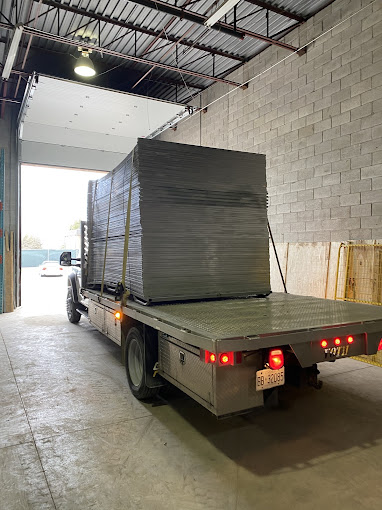
The key differentiator is size and portability. A single pickup panel fits in most pickup trucks or full-size vans. Compare that to standard panels, which are 9.5 feet wide, weigh 80-150 pounds, and require a truck or trailer to transport.
Standard Temporary Fence Panels: What’s the Norm?
Standard temporary fence panels have been the industry default for decades.
Typical specifications:
- Height: 6 or 8 feet
- Width: 9.5 feet (standard), 8 feet (some variants)
- Weight: 100-150 pounds per panel
- Material: Hot-dipped galvanized steel or PVC-coated steel
- Installation: Requires two people for safe setup
- Transport: Requires truck or trailer delivery
Standard panels are designed for larger perimeter installations where you need to cover significant distances quickly and efficiently.
Key Differences: Pickup Panels vs. Standard Panels
Size and Portability
Pickup panels: Fits in most trucks. One person can pick up, carry, and install. No special equipment needed for transport or installation.
Standard panels: Requires a dedicated truck, trailer, or professional delivery. Two people are needed for safe handling. Forklifts are recommended for large quantity handling.
Winner for mobility: Pickup panels by a wide margin.
Coverage per Unit
Pickup panels: 47 inches wide per panel. You need 12 pickup panels to cover 47 linear feet. That’s 12 separate units to manage.
Standard panels: 9.5 feet (114 inches) wide per panel. You need only 5 standard panels to cover 47 linear feet. Far fewer units to install and manage.
Winner for efficiency: Standard panels (fewer units to install for the same coverage).
Installation Time
Pickup panels: Fast for small sites. One person installs in minutes. But if you need 20 panels, that’s 20 individual setups.
Standard panels: Requires coordination between two people, but covers more ground faster. A 100-foot perimeter needs only 11 standard panels versus 26 pickup panels.
Winner for large projects: Standard panels (far fewer installation points).
Cost per Linear Foot
Pickup panels: Purchase price approximately $100-150 per panel = $25-32 per linear foot of coverage. Rental price varies but is typically $15-20 per panel weekly.
Standard panels: Purchase price approximately $150-250 per panel = $16-27 per linear foot of coverage. Rental price is typically $50-100 per panel weekly.
Cost per linear foot is competitive, but the real difference emerges in total project cost and delivery fees. Pickup panels save on delivery costs but require more units for the same coverage.
Durability and Security
Pickup panels: Lightweight construction makes them less sturdy. Better for temporary, low-security applications. Can blow over in strong winds or be moved by determined individuals.
Standard panels: Heavy-duty construction designed for sustained use and security. Better for long-term installations and high-security requirements. Wind-resistant design. Harder to move or damage.
Winner for durability: Standard panels.
Flexibility for Phased Projects
Pickup panels: Excellent for phased projects where you adjust perimeter size over time. Add or remove individual panels easily as project phases change.
Standard panels: Changing layout requires moving multiple heavy panels. More disruptive and labor-intensive.
Winner for flexibility: Pickup panels.
When to Use Pickup Panels
Pickup panels excel in specific situations.
Small Interior Work Sites
Indoor renovations in retail stores, offices, or restaurants often have tight hallways and limited space. Pickup panels fit through doorways and tight corners that standard panels can’t navigate.
Example: A downtown Toronto office building doing floor-by-floor renovations uses pickup panels to isolate each floor. At project end, panels are easily removed without damage to hallways or other floors.
Contractor-Managed Transport
Contractors with their own trucks can avoid delivery fees by picking up and transporting panels themselves. Over multiple projects, the savings on delivery fees offset the inefficiency of using more panels.
Example: A local contractor does 3-4 small renovation projects annually. Instead of paying $500-1,000 per delivery, they pick up panels in their truck and transport themselves, paying only for panels.
Phased Projects with Changing Scope
Projects where fencing needs change significantly between phases benefit from pickup panels’ flexibility. Add or remove panels individually without disturbing the entire perimeter.
Example: A retail development opens in phases. The initial phase uses 20 pickup panels, the second phase adds 15 more, and the final phase removes panels from completed sections. Easy adjustments without wholesale changes.
Emergency or Quick Deployment Situations
Sometimes you need fencing fast for an emergency or unexpected need. Pickup panels can be deployed immediately from local stock without waiting for delivery.
Example: A construction accident damages an existing perimeter. Pickup panels can be installed within hours to re-establish security, where standard panels would require a delivery truck.
Limited Storage Space
If you have limited storage space and don’t want to rent, purchasing pickup panels requires much less storage space than storing standard panels.
When to Use Standard Temporary Fence Panels
Standard panels are the better choice for most projects.
Large Perimeter Requirements
Anything over 150-200 linear feet of fencing is more efficient with standard panels. You’re covering significantly more distance with fewer units and less total installation labor.
Example: A 400-linear-foot construction site requires 42 pickup panels versus 42 standard panels (covering 397 feet). Installation takes one-tenth the time with standard panels.
Long-Term Construction Projects
Projects lasting months or years require durable, secure fencing. Standard panels are engineered for sustained use and security requirements.
Example: An 18-month downtown Toronto office tower renovation needs robust perimeter security. Standard panels provide better protection against theft and unauthorized access.
High-Security or High-Value Sites
Industrial sites, equipment storage, or projects with significant theft risk require the durability and security of standard panels. Pickup panels can be moved or damaged too easily for high-security applications.
Example: A manufacturing facility under renovation needs theft-resistant fencing. Heavy-duty standard panels with lockable gates and security upgrades are essential.
Professional Appearance Requirements
Commercial projects in visible locations benefit from the uniform, professional appearance of a full standard panel perimeter. Multiple small pickup panels look disjointed and unprofessional.
Example: A retail development in a premium shopping district uses PVC-coated standard panels in a coordinated color to match the building aesthetic. Multiple small panels would detract from the appearance.
Multi-Contractor or Complex Sites
Sites with multiple trades, equipment, and moving parts benefit from standard panels’ efficiency. Fewer installation points means less chance of gaps or security issues.
Example: A major GTA commercial development has multiple subcontractors, equipment deliveries, and phases. Standard panels create a unified, secure perimeter that’s easier to manage than dozens of individual pickup panels.
Wind-Exposed Locations
Pickup panels aren’t stable in wind-exposed areas. Standard panels are designed to withstand weather and high-wind conditions.
Example: An Ottawa waterfront project in an exposed location with consistent wind would use standard panels or wind-rated security solutions. Pickup panels would blow over or be damaged.
Rental vs. Purchase for Each Panel Type
Pickup Panels Purchase Considerations
Buying pickup panels makes sense if you’re a small contractor running regular projects. At approximately $100-150 per panel, purchasing 15-20 panels covers most small sites and pays for itself in 4-6 rentals.
Purchase ROI timeline: 6 months to 1 year if you use it regularly.
Pickup Panels Rental Considerations
Renting makes sense for one-time projects or occasional use. Rental companies handle transportation and pickup, eliminating logistics hassles.
Best for: Single projects, infrequent use, situations where you can’t store panels.
Standard Panels Purchase Considerations
Large contractors with multiple annual projects benefit from purchasing standard panels. Higher upfront cost ($150-250 per panel) is amortized across many projects.
Purchase ROI timeline: 2-3 years with regular use, but long-term savings are substantial.
Standard Panels Rental Considerations
Most small to mid-size contractors rent standard panels. Monthly rental ranges from $50-100 per panel, making a typical 400-linear-foot project cost $200-400 monthly. Rental companies handle delivery, installation, and maintenance.
Best for: Projects under 18 months, contractors without storage, businesses with seasonal or project-based fencing needs.
Making Your Decision: A Simple Framework
Use these questions to determine which panel type suits your project:
1. How many linear feet of fencing do you need?
- Under 100 feet: Pickup panels are efficient
- 100-300 feet: Either works; consider convenience
- Over 300 feet: Standard panels are more efficient
2. How long will you need the fencing?
- Under 3 months: Rent either type
- 3-12 months: Standard panels if renting; pickup if you can self-transport
- Over 12 months: Purchase standard panels if you’re a regular user
3. What’s your primary concern?
- Professional appearance: Standard panels (PVC-coated)
- Portability: Pickup panels
- Security: Standard panels (heavy-duty)
- Cost efficiency: Standard panels for large projects
- Flexibility: Pickup panels
4. Do you have transportation?
- Yes, your own truck: Pickup panels save delivery fees
- No: Standard panels (delivery included in rental)
Find the Right Temporary Fencing Solution for Your Project
At Lennex, we offer both standard temporary fence rentals and purchase options, as well as specialized portable solutions for smaller applications.
Whether your project needs the efficiency of standard panels or the portability of pickup panels, we can help you choose the right solution and get you set up quickly.
Our team has decades of experience matching contractors to the right fencing for their specific needs. We serve projects across Ontario and Quebec, and can provide recommendations based on your project type, size, timeline, and budget.
Not sure which option is right for you? Contact our team for a free consultation. We’ll help you evaluate your needs and find the most cost-effective and practical solution.
Check out our complete product range to see all available temporary fencing options.
Let’s find the perfect fencing fit for your project.